As a composer, one of my primary musical interests is instruments themselves—the tools that we use to make sound. Among my compositions in this area is hammers, which explores the noisy aspects of toy pianos, and ripples, which explores the resonance of the bass clarinet and marimba playing techniques. I am interested not only in conventional instruments, but also in toys, electronic circuits, found objects, and homemade devices whose physical properties suggest unexpected musical possibilities. I wrote about this in my dissertation Buy, Build, Break: Composers and Objects.
I’m also interested in unique ways to display or package instruments. These interests have led to sound sculptures and experimental performance systems as well as compositions. Across these projects, I am interested in the relationship between an object’s physical identity and the sounds it can produce.
Junk synths
The Junk Synths are three suitcase-enclosed performance systems made with small instruments. Over time, I collected quite a few toy instruments, electronic devices, cassette players, etc. My goal with the Junk Synths is to have portable systems that don’t require time to set up for each performance. The added benefit is that the static layout becomes an instrument I can learn to play. Each enables a variety of configurations, but also inherent limitations. I plan to start releasing recordings with these systems in 2027.

The first Junk Synth features a circuit-bent Speak & Spell, Stylophone, Atari Punk Console, Korg Monotron, Bleep Labs Pico-paso, Bleep Labs drum machine, Zoom effects pedal, Velleman digital delay, custom patchbay, and small Nady mixer. I usually output mono but have two mini-Marshall amps because they just fit the aesthetic. In this instruments, I wanted a variety of glitchy and lo-fi sounds, so we have instruments that make drones and pulses, as well as short bursts and percussive effects.
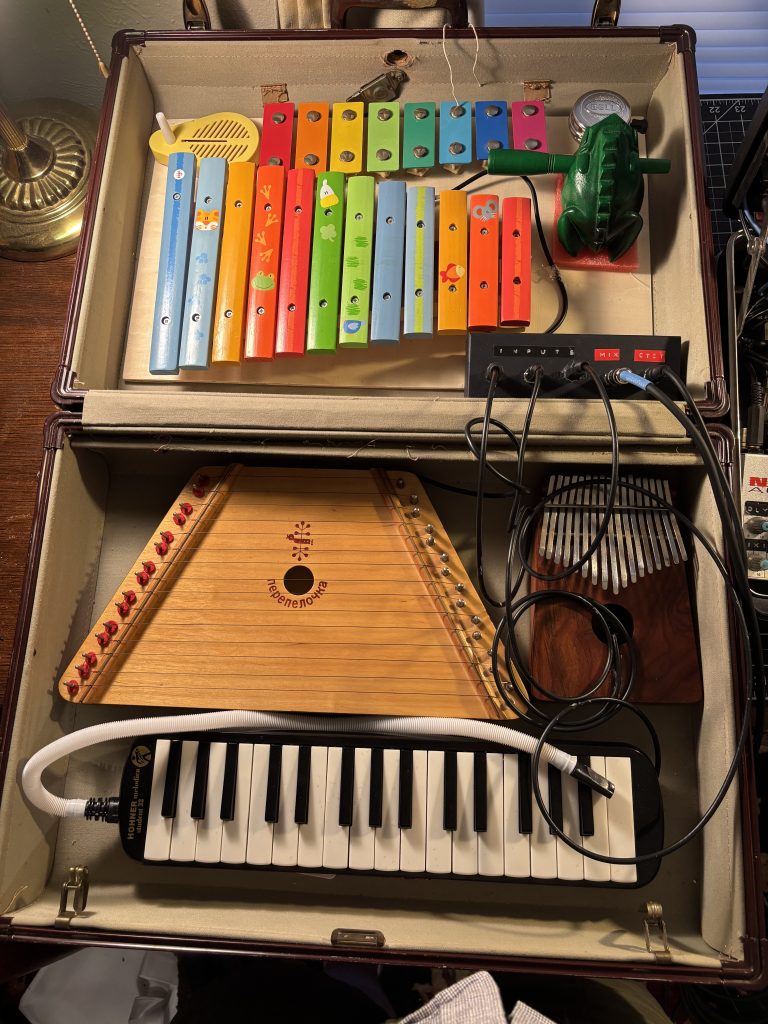
Junk Synth II (Acoustic)
The Junk Synth II (Acoustic) has a small patchpay and piezo contact mics so the instruments can be amplified and processed. It features a small glockenspiel and xylophone, bicycle bell, toy ratchet, frog guiro, zither, kalimba, and melodica. These are toy instruments I enjoy improvising with, and putting them in a fixed order, with ready amplification, makes it easy to incorporate into a performance. The Junk Synth II enables more melodic and harmonic elements to improvisations, while inviting associations with nostalgia and whimsy.
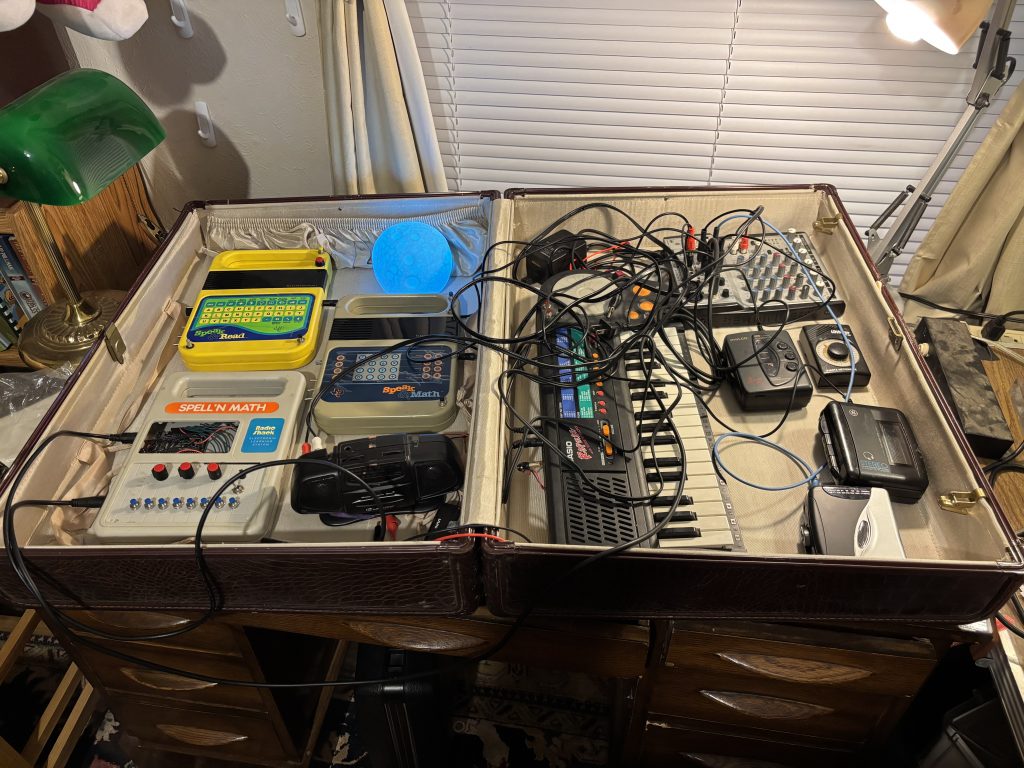
Junk Synth III—in progress
The Junk Synth III houses another set of small instruments and devices: circuit-bent Speak & Read and Speak & Math, circuit-bent Casio Rapman, an Arduino-based synth/sequencer, a small radio and metronome, three cassette players, and a small mixer. This one has less focus on processing than the first synth, with the sound generators enabling longer, evolving soundscapes.
sound sculptures
My sound sculptures all play generative music within unique housings. Although not created as a series, these pieces reflect my interests in the visual aesthetics of childhood, domesticity, DIY, and kitsch. The music reflects my fascination with the differing perceptions of music — what some might call ethereal and soothing, others call eerie and strange. They were shown together at MoxiePOP in Greenville, NC in June 2017.
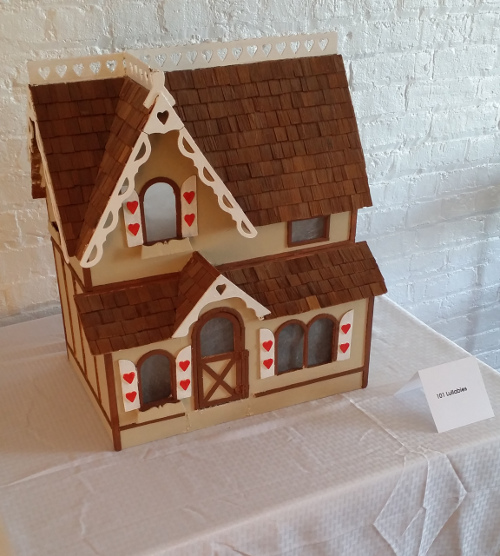
101 Lullabies
This sculpture is an old doll house with ghostly lights and speakers playing computer-generated lullabies. I made a program in the computer music language “SuperCollider” which creates the lullabies by randomly choosing a mode, meter, accompaniment pattern, and melody. Since they were created somewhat randomly, they range from cute to wistful to creepy!
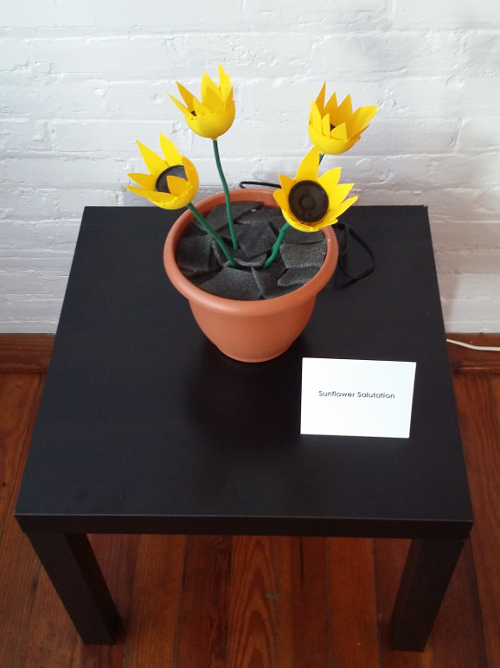
Sunflower Salutation
This sculpture is a flower pot with deliberately fake-looking flowers, each of which contains a speaker. There are four different elements in the music, which was put together in the computer music program Pure Data: long organ tones, stretched choir notes, recordings of birds, and synthesized percussion (vibraphones, marimbas, etc.). Much of the music is bright and peaceful, but some mornings (ahem, Monday), there could be a lurking sense of dread!
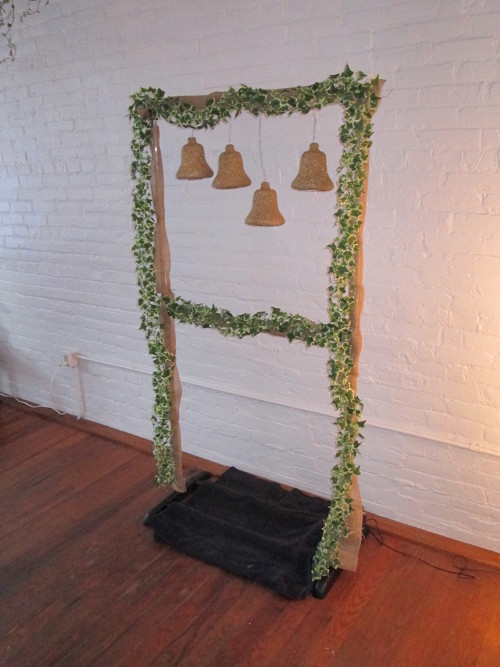
Spectral Cathedral
This sculpture features speakers hidden inside decorative bells. I made the music in SuperCollider. The program synthesize tones based on bells, and can be set to loop any number of times. For each loop, the computer chooses a “root” note, rhythm and melody, and whether it triggers other sounds (a trickling water sound, gongs, or ghostly whistles). The “root” note gradually moves up and down in each loop, so you may hear something bright and sparkly, then come back in five minutes and hear something dark and murky.
circuit bending
I enjoy working with small electronic kits and circuit bending electronic toys to create unpredictable sound sources for improvisation and composition. I’m drawn to the tactile, exploratory nature of bending—opening devices, discovering new behaviors, and embracing the unstable or noisy qualities that result.
Circuit-bent Casio Rapman
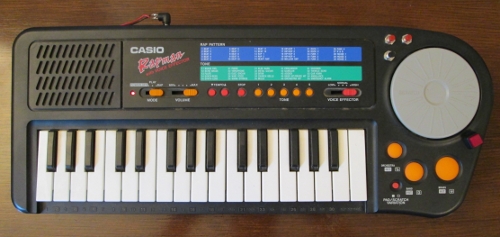
Demo:
Circuit-bent Leapfrog
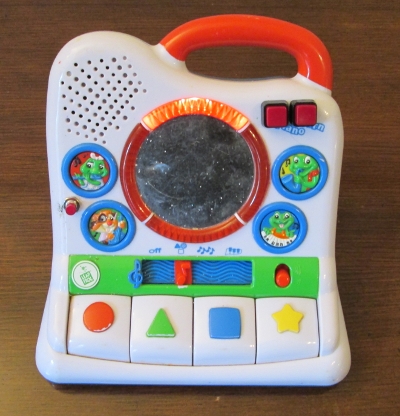
Demo:
Circuit-bent Speak & Read
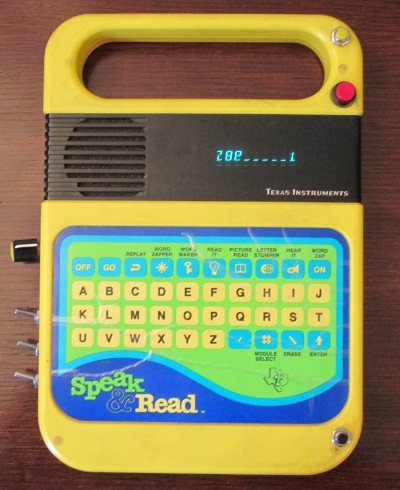
Demo: