about Adam Scott Neal’s piano music
I started studying piano in third grade, and while I never aspired to be a professional performer, it remains my main instrument and feels like “home.” In reflecting on my compositions for piano, I’ve found that I emphasize harmony, repetition, and memory.
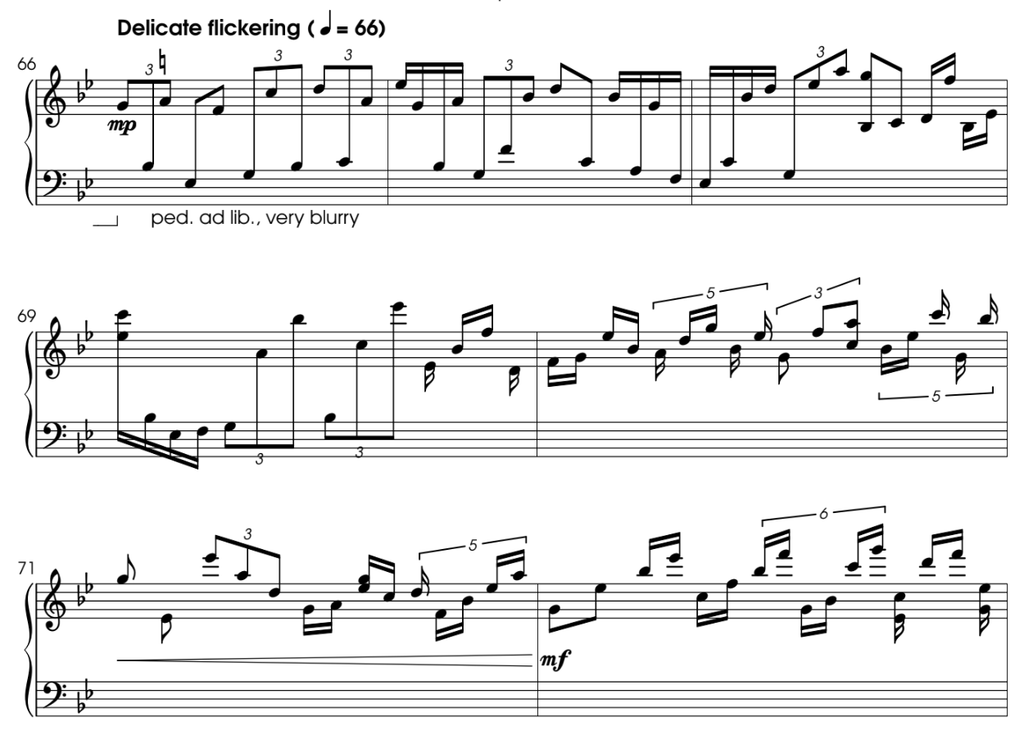
Sometimes I keep the harmony static for a long time, and sometimes I follow a recognizable progression. Komorebi centers around an E-flat drone, which in some sections is articulated as “sympathetic resonance” and in others by keeping the pedal down while playing gestures across the whole keyboard. Rivermist, for violin, horn, and piano, directly lifts chord progressions from the Beatles.
Likewise, sometimes I write spacious music that sits in one resonance, and sometimes I write material that repeats and transforms. I tend to like forms that are easy to follow—a simple arch, ABA form, or a process that gradually expands and contracts—and my material is influenced by both classical and popular music.
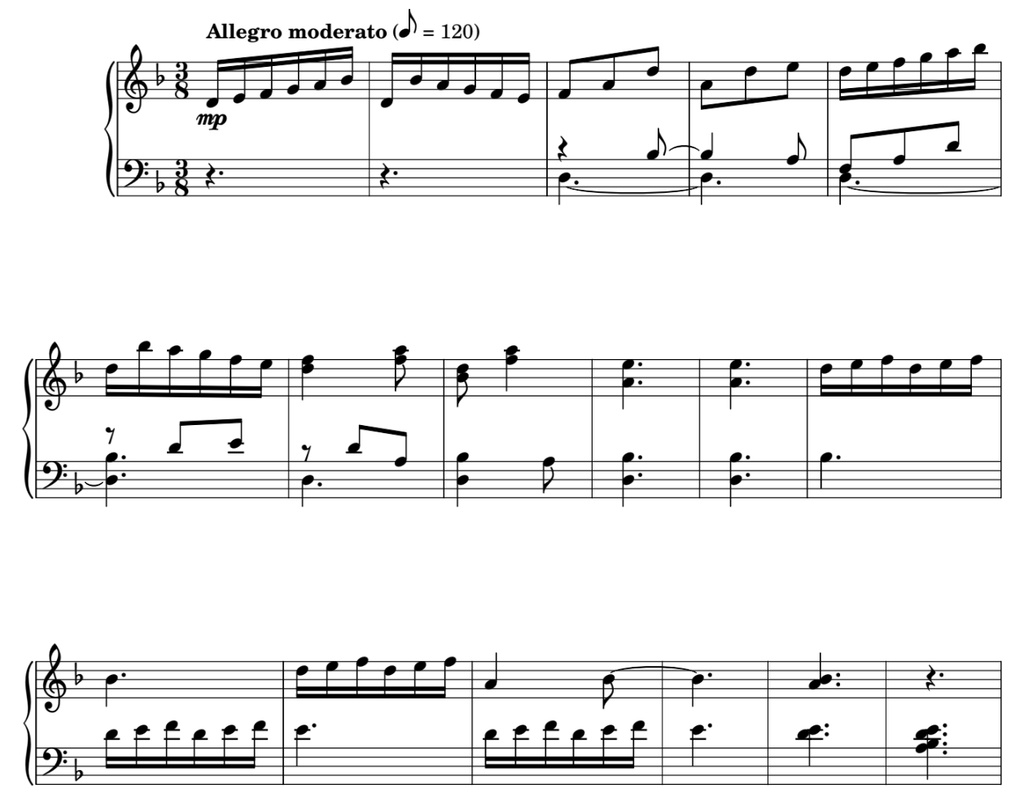
A number of the pieces play directly with musical memory. melting starts with Chopin’s famous E-minor Prelude, then lets its descending gestures and sustained melody break apart, change harmony, and lead into fragments of other familiar piano pieces. Baroque Suite does something similar with keyboard music by Bach and Handel, keeping the original structures while flattening out and extending the harmonies. Tidal, for piano and fixed media, employs gestures that allude to classical music, and follows a sonata form, but the harmonies are based on the harmonic series and difference tones.
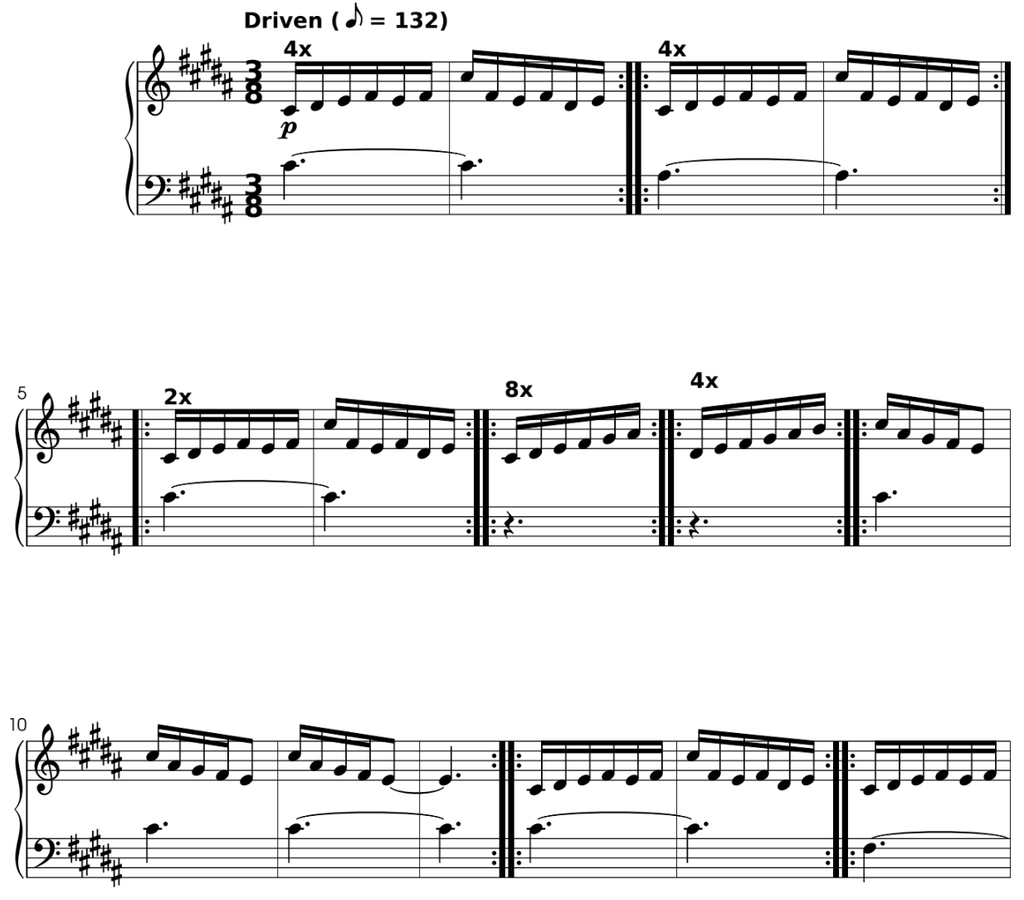
Other pieces approach these ideas more indirectly. Restore is a collection of twenty three-minute miniatures inspired by the pitches of my singing bowls, with influences ranging from ambient and minimalism to pop and soul. Late Frost uses repetition and rhythm across a collection of piano tracks that loosely follows the seasons from fall to early spring.
Across all of these pieces, I’m interested in what happens when familiar ideas are repeated, transformed, or juxtaposed with other material. The piano is a particularly good place to explore how musical ideas can interact.
-Adam Scott Neal, October 2026