about Adam Scott Neal’s music for brass:
As a recovering trombonist, I have an intimate familiarity with the sound and physical character of brass instruments. One thing that is interesting about brass is that the instruments have a relatively homogeneous timbre. Brass instruments blend well and can sound like a single unit, providing power and gravitas to the music. To create contrast, composers need to consider elements beyond the notes, like using mutes to alter the timbre, or making use of different articulation and dynamics.
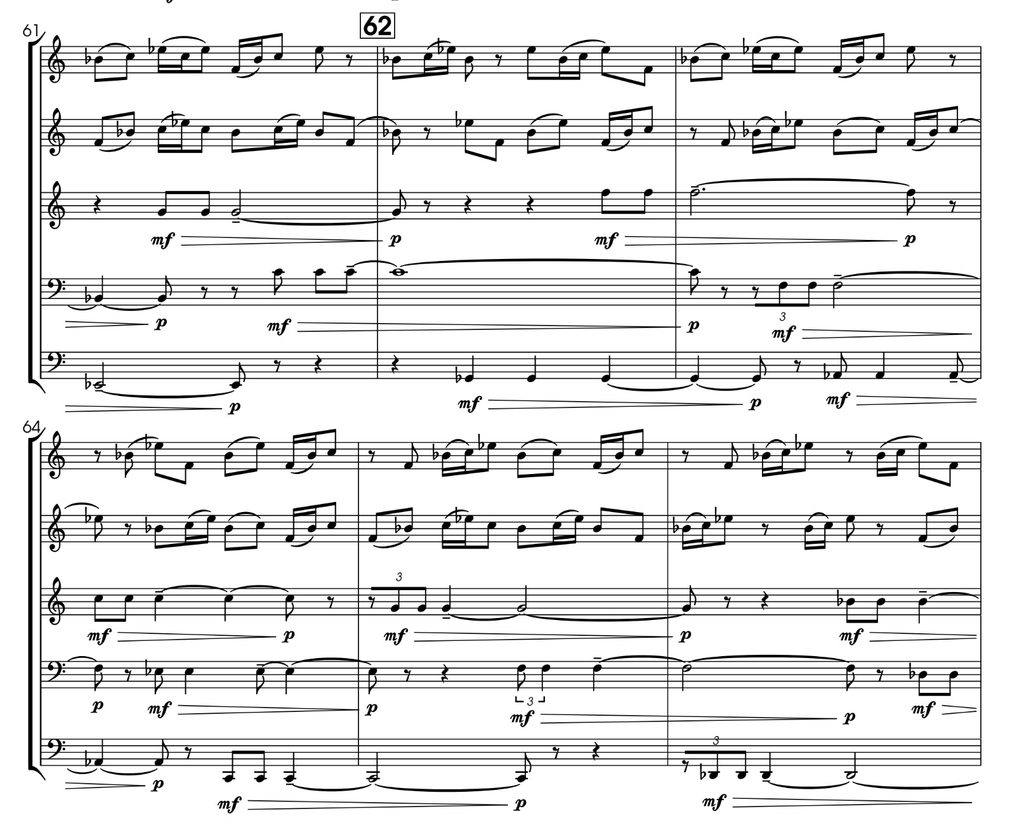
My brass music frequently combines block chords, unison rhythms, and close harmonies—all characteristic of brass groups. But I also employ stratified layers of activity. For example, the end of my brass quintet Práis divides the ensemble into low brass and trumpets; the trumpets play repeating but shifting upward gestures, while the low brass create longer, slowly descending harmonies. Likewise, in the third movement of work songs, the horn and trombone play fast, interlocking, machine-like material while the tuba plays a slower-moving bass line. Some of the metaphors I was thinking of when writing these pieces were palimpsests, geological strata, and television interference.
In terms of rhythm, I like to write repetitive grooves with small interruptions or “hiccups,” where I drop or add a beat. shoulder to shoulder and First and Third are prime examples of this approach. They also show my approach to form: while on the macro level I keep things relatively simple, in the surface level, the music behaves somewhat like a kaleidoscope: recurring materials are interrupted, recombined, or briefly displaced by new material, rather than following linear development or clear ABA phrasing.
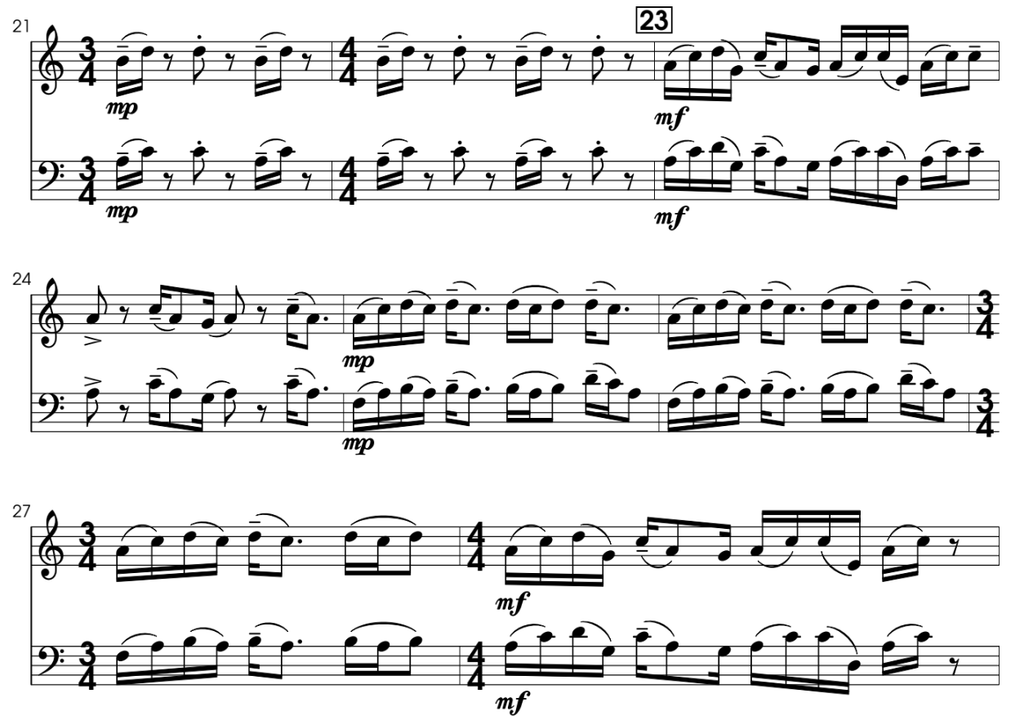
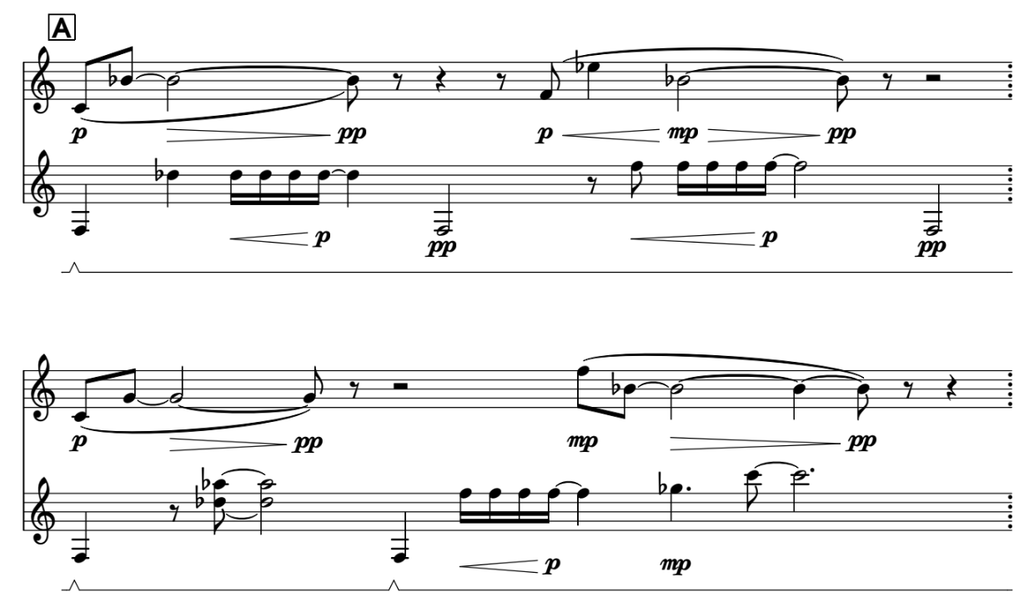
Like much of my work for other instruments, my brass compositions are inspired by sound and material. Tèarmunn began with the physical characteristics shared by horn and vibraphone—both metal instruments centered around F. First and Third is named after the trombone’s slide positions, and indeed most of the material can be played on those two positions.
Perhaps drawing on my marching band experience, I’ve given several of my brass pieces titles that allude to work and partnership, such as shoulder to shoulder for horn and trombone and allies for brass ensemble. work songs for horn, trombone, and tuba deliberately draws on the character of spirituals, sea shanties, railroad songs, and other music associated with labor. While my music never deliberately tells stories, I am interested and concerned with how humans interact with their instruments and tools, and what meaning is created by working together.
-Adam Scott Neal, October 2026